
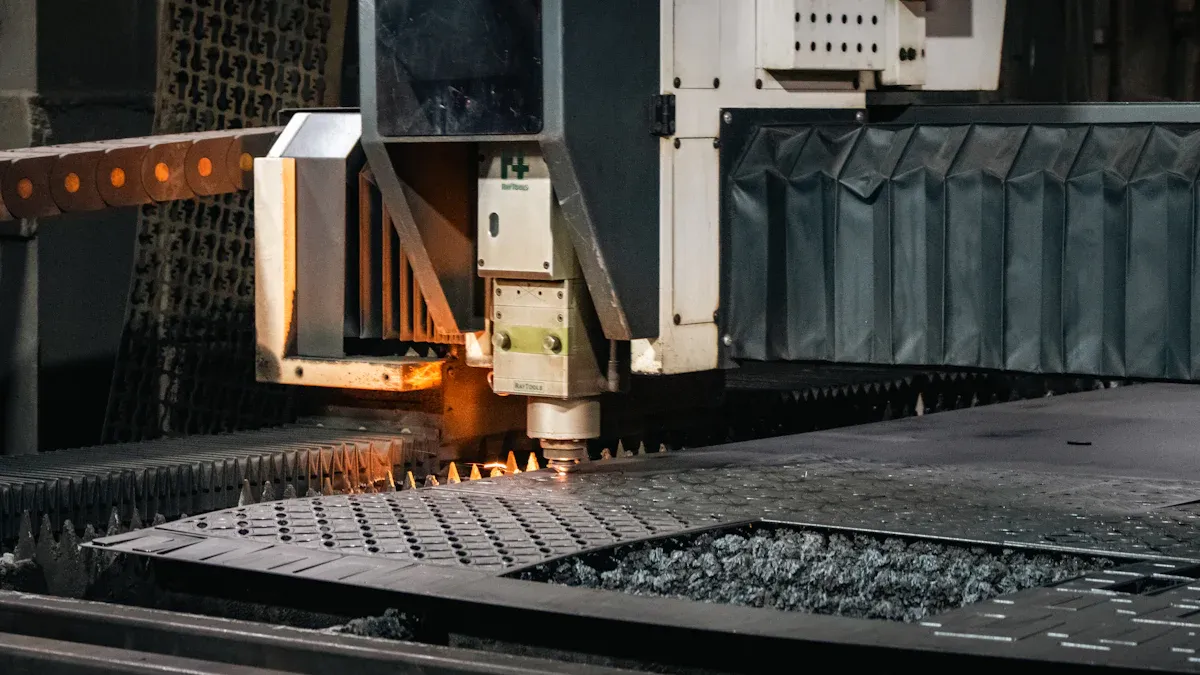
A CNC machining quote is made up of several cost drivers: material, design complexity, tolerances, surface finish, production volume, machining time, tooling, labor, and overhead. Quotes change because any shift in these variables changes machining time, material use, or setup effort. You can control these same variables to achieve CNC machining cost reduction. This article first explains what changes a quote, then shows practical steps for CNC machining cost reduction while keeping quality. Read on to see where your quote comes from and how to bring it down.
Key Takeaways
-
The material you pick and smart design are the biggest cost factors you can control.
-
Make the part shapes simple and use normal tolerances so you don’t pay extra.
-
Bigger batch sizes spread out setup costs and lower the price for each part.
-
Make a prototype first to find design problems before you start a full production run.
-
Work with your supplier to make the process better and get instant quotes for budgeting.
What Drives CNC Machining Cost
Material and Wastage
Material cost depends on the type and amount you ask for. Aluminum priced at $10 per kilogram costs $200 for a 20 kg order. Special alloys and engineering plastics cost more, so your material choice sets a big share of the quote before any cutting starts.
Wastage matters just as much. CNC machining removes 30%–70% of the original blank volume as chips. A blank sized close to the part’s bounding volume leaves less extra material to cut away. You pay for the stock you buy, not the part you get, so a tighter blank lowers both material spend and cutting time.
Complexity and Machining Time
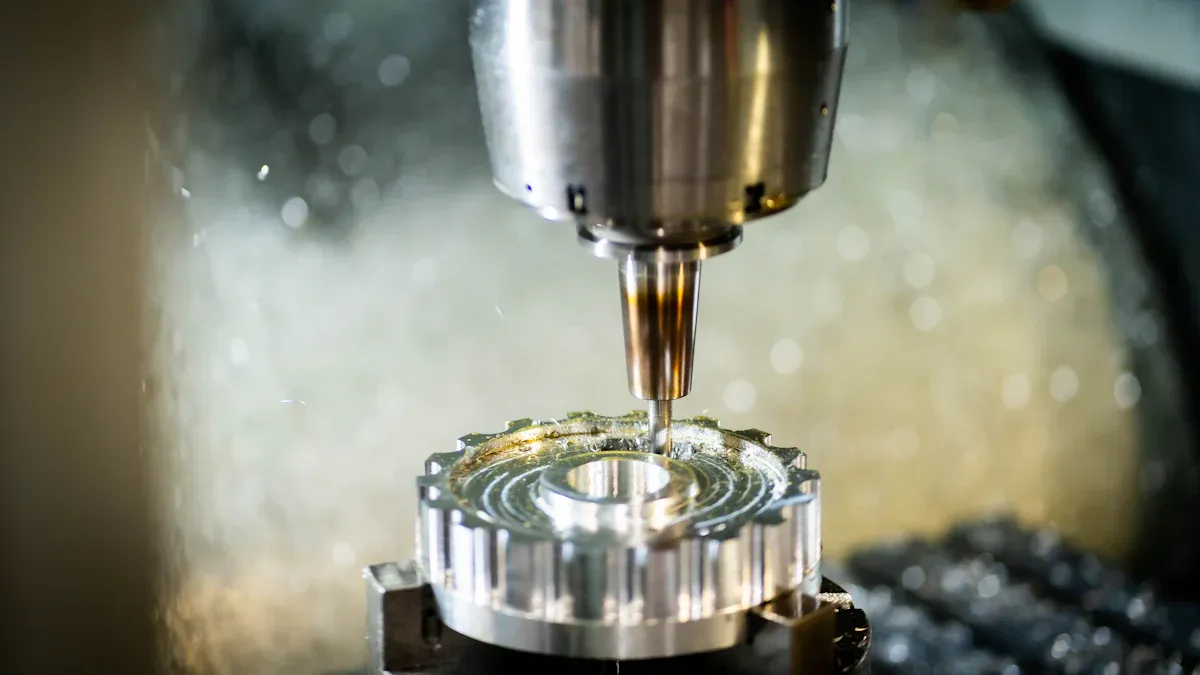
Machining time is a main cost driver. You estimate it by dividing the volume to remove by the material removal rate. Removing 20 cubic inches at 0.5 cubic inches per minute takes 40 minutes of spindle time. Faster removal rates shorten the cycle, and the hourly machine rate then multiplies a smaller number.
Complex geometry makes that cycle longer. Sculptured surfaces need many passes with a ball end mill. Cavernous slots, super deep holes, and threads each add tool changes, slower feeds, and extra inspection. Splitting a complex part into bolted or screwed components often costs less than machining it as one piece. Each simple component machines faster with standard tooling, and assembly adds little compared with hours of slow, delicate cutting.
Tolerances, Finishes, and Extras
Tolerance and Surface Roughness
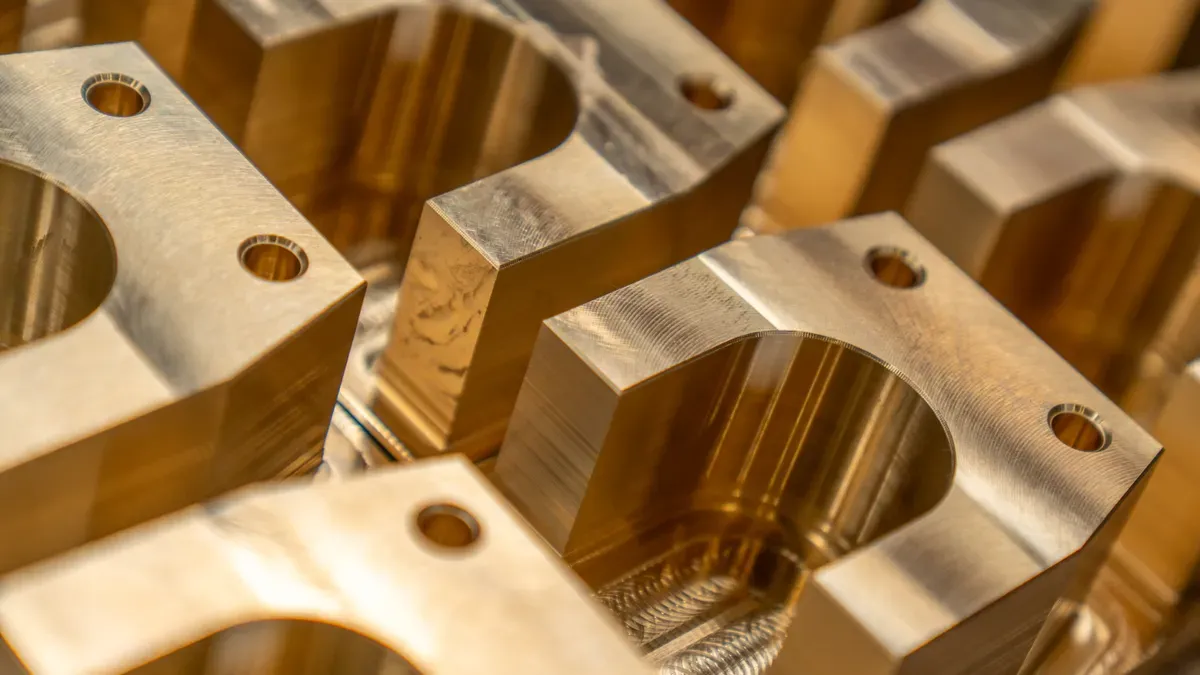
The standard tolerance of ±0.127 mm works for most jobs. You only pay more when a feature really needs tighter control. Tight tolerances slow down the cut, require more inspection, and sometimes mean a second operation. Before you put the tighter band on the drawing, ask yourself whether a mating part truly needs it.
Surface roughness has its own extra charge on top of the base price. The table below shows the typical add-ons.
|
Surface Roughness |
Approximate Cost Premium |
|---|---|
|
1.6 µm Ra |
about 2.5% |
|
0.8 µm Ra |
about 5% |
|
0.4 µm Ra |
up to about 15% |
A smoother finish means slower feeds, lighter passes, and more polishing time. Make 1.6 µm Ra your standard and save 0.4 µm Ra for sealing faces or bearing surfaces.
Deburring, Text, and Lead Time
Every machined edge needs attention. Automated deburring works well on metals and gives the same results across a batch. Manual deburring with a file or abrasive paper is a cheaper way on simple parts. It saves the cost of ball end mills and 3D profiling, and a skilled operator can break edges quickly.
Text engraving takes a lot of time with a ball end mill. Each character follows a slow, shallow toolpath. Keep engraved features above the minimum size of 0.035 in. (0.90 mm) in metals and 0.020 in. (0.51 mm) in plastics. Smaller text may come out unreadable and waste cycle time.
Short lead times raise cost through overtime and expedited shipping. Special processes such as EDM add cost on top of the base machining price. Build realistic schedules into your quote request and you avoid these premiums.
Volume, Rates, and Overhead
Batch Size and Setup Costs
Setup work happens once per job, no matter how many parts you order. Programming, fixturing, and tool setting cost the same for one unit as for one hundred. Larger batch sizes spread that fixed cost over more units, so the per-unit price falls fast. A single unit might quote at £134. Ten units come to £385 total, or £38 each. One hundred units reach £1,300 total, or £13 each. The setup charge never goes away. It just becomes a smaller share of every part you buy.
So order quantity changes your quote as much as any design choice. Ask your supplier where the price breaks are before you commit to a number. A small increase in batch size often cuts the unit price more than a redesign would.
Machine Rates, Labor, and Scrap
The hourly machine rate depends on the equipment your part needs. The table below shows typical ranges.
|
Machine Type |
Approximate Hourly Rate |
|---|---|
|
3-axis CNC machining |
around $40 |
|
CNC turning |
about $35 |
|
Multi-axis machines |
$75–$125 |
|
High-end 5-axis |
$75–$200 |
A $100 hourly rate over a 3-hour cycle costs $300 in machine time alone. Tooling adds to that number. You pay for the first purchase, plus upkeep and replacement as edges wear. A well-chosen tool cuts faster and lasts longer, so tool selection affects both sides of the ledger.
Labor covers programming, setup, and operation. Overhead covers facilities, utilities, administration, quality control, and inspection. Scrap and rework from errors add cost on top of all of these. Strong quality control and inspection lower that risk, and the inspection charge usually costs less than a ruined batch.
CNC Machining Cost Reduction: Design
DFM and Simpler Geometry
Design for manufacturability (DFM) gives you the biggest savings. That is because design choices lock in most of the cost before a cutter even touches metal. Start with the shape. Make shapes simpler wherever the part still works. Every extra pocket, blend, and undercut adds more toolpath and setup time. Design for standard tooling so the shop can reach every feature with common end mills and drills, not custom cutters.
Avoid thin walls. Keep wall thickness above 0.020 in. (0.51 mm). Thin walls shake during cutting, so the machinist must take lighter passes and slow the spindle. That makes the cycle longer and raises the risk of scrap.
Limit threads and avoid tiny features. Each thread size means another tool and another operation. Small holes and narrow slots need small tools that break easily and cut slowly.
Corner relief is a handy DFM tool. A cutter has a round shape, so it cannot make a truly sharp inside corner. In 304 stainless steel, a 0.25 in. (6.35 mm) wide relief lets you keep corners that work as sharp to about 1-1/4 in. (32 mm) deep. Aluminum and plastic allow about twice that depth. Add the relief in your model and the shop skips a slow EDM step.
Material, Tolerance, and Finish Choices
Switching material is one of the most reliable ways to cut CNC machining cost. The table below shows common swaps.
|
Instead of |
Consider |
When It Works |
|---|---|---|
|
17-4 PH stainless |
316L or 304 |
High strength is not needed |
|
4140 |
1018 |
Hardness is not critical |
|
Copper |
Aluminum |
Weight and cost savings matter |
Plastics need careful picking too. Some grades soak up moisture or shift with temperature, so choose a grade that holds its size well for tight parts.
Tolerance and finish choices carry hidden cost. Use the default tolerance of ±0.127 mm unless a feature really needs tighter control. Name a standard surface finish such as 1.6 µm Ra and save smoother finishes for sealing faces and bearing surfaces. Every step toward a finer finish adds passes and inspection time.
Specify only the finishes your part really needs. A decorative anodize on a hidden bracket adds cost with no benefit. Use commercial off-the-shelf (COTS) components such as gears, bearings, and fasteners wherever you can. A bought bearing costs less than a machined one, and it comes with known tolerances. Each COTS part you specify takes custom machining out of the quote. That is easy CNC machining cost reduction you can count on before you send the RFQ.
CNC Machining Cost Reduction: Volume and Partners
Prototypes, Batches, and Automation
Make a prototype before you start a big production run. One machined sample shows design flaws, fit problems, and tolerance conflicts while fixing them is still cheap. Find those issues at the prototype stage and you avoid a costly mass-production error. Scrapping one part hurts much less than scrapping a whole batch.
Order in batches once the design is stable. Setup work happens once per job, so a larger quantity spreads that fixed charge across more units and lowers the per-unit price. Ask your supplier where the price breaks fall before you settle on a number.
Automation and robotics work well for volume production. Machines do not get tired, so they repeat the same motion with fewer mistakes and steady quality across a long run. Accuracy stays steady, waste stays low, and the per-part cost drops as volume rises. High-volume work suits automated cells; one-off prototypes usually do not justify the programming effort.
Process Optimization and Instant Quotes
Process optimization takes cost out of the cycle itself. Simpler toolpaths cut air time and unnecessary moves. Good work-holding keeps the part rigid, so the shop can run faster feeds without chatter. Strategic tool changes group features that share a cutter, which saves tool changes and setup steps. Lean techniques remove waiting, double handling, and idle spindle time from the workflow.
Supplier collaboration pays off here. Share your drawings early and ask the shop which features drive their price. Competitive supplier selection keeps quotes honest, and a partner who understands your application often suggests a cheaper route you missed. Instant quoting platforms help you spot costs upfront, which supports better budgeting and cost control before you commit. [KOONZE INPUT NEEDED: verified Koonze instant-quote service link and any published Koonze case example with documented savings.]
CNC machining and 3D printing differ in cost by production volume, part complexity, and material. Printing suits complex, low-volume shapes with no tooling; machining suits tight tolerances and durable materials at higher volumes. Match the process to the job and you avoid paying for capability you do not need.
Every choice above supports CNC machining cost reduction without touching part quality. Prototype first, batch your orders, automate where volume justifies it, and optimize the process with your supplier. [KOONZE INPUT NEEDED: Koonze-specific capability statement for prototype and low-volume CNC work.]
Your CNC machining quote follows a set of factors you can predict: material, complexity, tolerances, finish, volume, time, tooling, labor, and overhead. You can have a say in each one before you finalize a quote. Smart design and material choices give you the most reliable path to CNC machining cost reduction. Make geometry simpler, pick materials that are easy to machine, and ask only for the tolerances and finishes your part needs. Instant quoting tools also help you see costs upfront, so you can budget better and control cost. Use DFM principles early in design, and every choice after that gets easier and cheaper.
FAQ
Why does the same part cost different amounts from different shops?
Each shop applies its own hourly rate, tooling choices, and setup approach. A 3-axis job might run around $40 per hour at one supplier and more at another with multi-axis equipment. Ask what drives the price before you compare totals.
Does a tighter tolerance always raise the price?
No. The default ±0.127 mm covers most features at no extra charge. You pay more only when a feature needs a tighter band, because the cut slows and inspection grows. Apply tight tolerances to mating surfaces alone.
How much does a smoother surface finish add?
Expect roughly 2.5% over base price for 1.6 µm Ra and about 5% for 0.8 µm Ra. A 0.4 µm Ra finish can add up to about 15%. Specify the standard finish unless a sealing or bearing face demands smoother.
Can I lower the price by changing the material?
Often, yes. Choose 316L or 304 stainless instead of 17-4 PH when high strength is not needed. Pick 1018 over 4140 when hardness is not critical. Aluminum replaces copper where weight and cost savings matter. Confirm properties against the datasheet first.
Do instant quotes replace a formal quotation?
No. An instant quote gives you a fast estimate for budgeting and comparison. A formal quote confirms the final price after the shop reviews your drawings and tolerances. [KOONZE INPUT NEEDED: Koonze instant-quote scope and turnaround.]