For most CNC machined parts, 6061 in T6 temper is the practical default. It costs less, machines more easily, and resists corrosion better. Choose 7075 in T6 or T651 temper when maximum strength and fatigue resistance matter most.
Every strength and property value in this 6061 vs 7075 aluminum comparison ties to a specific temper. The temper designation matters as much as the alloy grade itself.
This article compares 6061 and 7075 aluminum across composition, mechanical properties, machinability, anodizing, welding, corrosion resistance, cost, fabrication, and applications. It closes with a decision table for 6061 vs. 7075 selection.
Key Takeaways
Choose 6061-T6 for most CNC parts. It costs less, machines easily, and resists corrosion well.
Pick 7075-T6 for high-strength parts. It offers nearly double the tensile strength of 6061-T6.
Always specify the temper on your drawing. Temper controls strength and other properties.
Avoid welding 7075 for structural joints. Use fasteners or adhesives instead. 6061 welds well.
Protect 7075 outdoors with anodizing or coating. 6061 needs little protection.
6061 Aluminum and 7075 Aluminum at a Glance
These two grades are at opposite ends of the same family. Both are heat-treatable 6000 and 7000 series alloys, but they do different jobs in the shop. A quick look at each alloy shows where it fits.
6061: The General-Purpose Alloy
Magnesium and silicon give 6061 its balanced character. The alloy has moderate strength, good toughness, and dependable corrosion resistance in most indoor and outdoor settings. In T6 temper, yield strength reaches about 276 MPa (40 ksi), which easily covers brackets, housings, fixtures, and prototype frames.
Machinists like this grade because it cuts in a stable way. Chips break cleanly, tools wear slowly, and parts keep their dimensions well during long runs. Welders also prefer it, since 6061 accepts common filler alloys and responds predictably to post-weld heat treatment. Anodizing takes evenly, and clear or dyed finishes look the same across a batch. Buyers find 6061 aluminum stocked in plate, bar, and extrusion at most service centers, which shortens lead time for low-volume orders.
7075: The High-Strength Alloy
Zinc and copper push 7075 aluminum toward aerospace-grade performance. In T6 temper, tensile strength approaches 572 MPa (83 ksi), nearly double the value for 6061-T6. That strength-to-weight ratio suits aircraft fittings, racing components, and high-load tooling where every gram counts.
The trade-offs show up during fabrication. This grade cuts with more resistance, wears tools faster, and needs rigid setups to control chatter. Welding is usually not recommended for structural joints, and corrosion resistance is lower than 6061 unless the part gets a protective finish such as anodizing or coating. Stock availability is narrower, and the alloy costs more per kilogram. Engineers who compare 7075 aluminum vs. 6061 aluminum usually accept these limits in exchange for load capacity. A direct look at 6061 aluminum and 7075 aluminum side by side confirms the pattern: one alloy favors versatility, the other favors performance. The next sections examine how temper and composition shape these properties.
Grade and Temper Designations
Reading 6061-T6 and 7075-T6
The letters and numbers after the hyphen really matter. For both grades, T6 means the part went through solution heat treatment and then artificial aging. Solution treatment melts the alloying elements at high heat. Aging then forms tiny particles that lock the metal’s structure and make it stronger.
A buyer who orders 6061 t6 aluminum expects a steady, heat-treated product. The same idea applies to 7075. A 7075-T6 plate comes in a different condition than annealed stock, and the two act nothing alike on the machine. The 7075 t6 vs. 6061 t6 comparison only makes sense when both sides have the same temper label.
Why Temper Changes Every Number
Temper controls the microstructure, and the microstructure controls every mechanical value. The 6061 aluminum alloy in T6 temper shows a yield strength near 276 MPa (40 ksi). The same 6061 aluminum in annealed condition is much softer and much weaker. A designer who quotes a strength figure without the temper gives the shop an incomplete instruction.
The 7075 aluminum alloy follows the same rule. In T6 temper, 7075 aluminum reaches a tensile strength near 572 MPa (83 ksi). That figure belongs to T6 alone. Other tempers, including T651 with its stress-relief stretch, change the balance between strength and dimensional stability. Engineers should get the properties for the exact temper from the supplier datasheet and write the temper on the drawing. This habit prevents mismatched data and costly rework.
Chemical Composition: 6061 Aluminum vs 7075 Aluminum
The elements mixed into each metal decide how it acts. The makeup of 6061 aluminum and 7075 aluminum explains why they differ in strength, corrosion resistance, and how they machine.
Magnesium and Silicon in 6061
Magnesium and silicon are the main ingredients in the 6061 aluminum alloy. During heat treatment, they join to form magnesium silicide particles. These particles work like a fine frame inside the metal. They stop dislocations from moving and lift the yield strength to about 276 MPa (40 ksi) in T6 temper.
The mix stays balanced and predictable. Magnesium and silicon stay at modest levels, and copper shows up only in small amounts. That lean recipe keeps the metal ductile, weldable, and resistant to corrosion. A machinist sees the result in steady chips and low tool wear. A designer sees it in a part that keeps its shape without extra finishing steps.
Zinc and Copper in 7075
Zinc and copper do the heavy lifting in the 7075 aluminum alloy. Zinc leads the mix, and copper adds a second strengthening phase. Heat treatment turns these elements into a dense network. The network pushes tensile strength to nearly 572 MPa (83 ksi) in T6 temper, almost double the value for 6061-T6.
This chemistry also brings side effects. Copper lowers corrosion resistance, so bare 7075 aluminum needs a protective finish in wet or salty service. The dense structure fights cutting tools and makes machining harder. Engineers who compare the properties of 6061 and 7075 aluminum alloys see the trade clearly. One chemistry favors toughness and finish, the other favors load capacity.
Mechanical Properties: Difference Between 6061 and 7075 Aluminum
The mechanical properties of these two grades set them apart more sharply than anything else. Both alloys come in heat-treated tempers, and the temper label sets the numbers. The figures below come from published material datasheets at room temperature. They serve as a general engineering reference, not as a promise for any single mill lot.
Strength, Hardness, and Fatigue
Start with tension. The 6061-t6 aluminum properties include a yield strength near 276 MPa (40 ksi) and a tensile strength around 310 MPa (45 ksi). The 7075-t6 aluminum properties show a tensile strength near 572 MPa (83 ksi), almost double the 6061 figure. That gap defines the difference between 6061 and 7075 aluminum in load-bearing work.
Hardness follows the same pattern. The 7075 aluminum alloy in T6 temper tests noticeably harder on the Brinell and Rockwell scales than the 6061 aluminum alloy in T6. A harder surface resists wear at sliding contacts, yet it also dulls cutters faster.
Fatigue tells a similar story. The 7075 aluminum in T6 temper holds a higher fatigue strength under repeated cycling, which is why aircraft fittings favor it. The 6061 aluminum in T6 temper offers lower fatigue resistance but more toughness, so it absorbs impact without cracking. Engineers comparing 6061 vs 7075 aluminum for cyclic loads should weigh strength against ductility, not strength alone.
Thermal and Electrical Behavior
Heat and current expose another split. The 6061 aluminum conducts heat and electricity well, because its lean chemistry leaves few obstacles in the metal lattice. Bus bars, heat sinks, and electronic enclosures often use it for that reason.
The 7075 aluminum alloy conducts less efficiently. Its dense zinc and copper network scatters both electrons and heat. Designers who need thermal spreading should treat this as a real penalty.
Expansion matters too. Both grades grow when heated, and the 7075 aluminum alloy expands slightly more per degree Celsius than the 6061 aluminum. A mixed-material assembly can therefore shift unevenly as it warms. Check the coefficient of thermal expansion on the datasheet for the exact temper before you set clearances.
One caution applies to every figure here. Never compare a 6061 value in T6 temper against a 7075 value in another temper. The 7075 t6 vs. 6061 t6 pairing is the only fair test, and the 6061 vs. 7075 aluminum numbers above assume exactly that match. Treat the 6061 vs. 7075 aluminum comparison as a starting point, then confirm the 6061 aluminum vs 7075 aluminum data against the mill certificate for your lot. A careful review of the difference between 6061 and 7075 aluminum always begins with the temper stamp.
Machinability and Anodizing Behavior
Cutting, Tool Wear, and Cost Impact
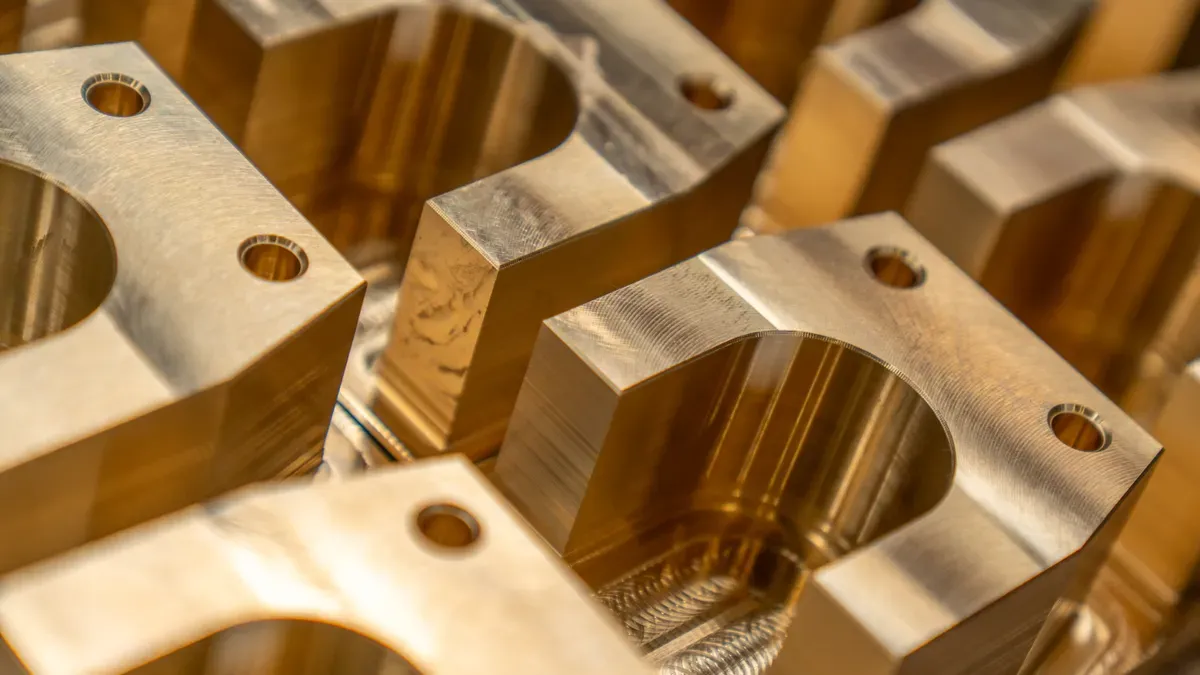
Tool life is what sets these two grades apart on the shop floor. The 6061 aluminum alloy cuts with low resistance. Chips break cleanly, and cutters stay sharp through long runs. The 7075 aluminum alloy fights the cutter instead. Its dense zinc and copper network dulls edges faster, so shops change tools more often and slow the spindle to control chatter.
Rigid setups matter more with the harder grade. Thin walls and deep pockets in 7075 need light passes and stable fixturing. A machinist who uses the same speeds as on 6061 will get chatter marks and a poor surface finish. The 6061 and 7075 aluminum grades therefore have different cycle times, and that gap shows up in the quoted price per part.
Anodizing Response and Color Limits
Anodizing builds a protective oxide layer on the surface. The 6061 aluminum takes this treatment evenly. Clear, black, and dyed colors come out consistent across a batch, which suits enclosures and visible prototype parts. The 7075 aluminum responds less predictably. Its copper content can tint the oxide layer and shift dyed colors, so matching a specific shade across lots is harder.
The 6061 aluminum alloy also holds up better under Type II sulfuric anodizing, the common decorative and protective process. Engineers who need tight color control should specify 6061 for cosmetic parts. The 7075 aluminum alloy still anodizes well for corrosion protection, but buyers should expect color variation and plan for it. Both grades benefit from sealing after anodizing to close the oxide pores.
Welding Performance
Welding joins metal parts using heat, pressure, or both. These two grades react to this process in very different ways. A shop that plans to weld a joint should decide on the alloy before it cuts the first chip.
6061 Weldability
The 6061 aluminum alloy welds well. Shops often use gas tungsten arc welding and gas metal arc welding on this grade. The 6061 aluminum gives steady results with these methods, and the joint keeps good ductility after it cools.
Filler choice matters. Welders often match the base metal with a 4043 or 5356 filler, and each option changes the joint’s strength and color match. A post-weld heat treatment can bring back strength in the heat-affected zone. Designers should mark that step on the drawing, because the softened zone near the weld loses strength until aging brings it back. The 6061 grade therefore works well for welded frames, tanks, and structural brackets.
7075 Weldability Limits
The 7075 aluminum alloy has real limits at the weld joint. Its zinc and copper content makes the melted zone likely to crack as it cools. Most structural codes therefore advise against arc welding this grade for load-bearing joints.
The 7075 aluminum also loses strength in the heat-affected zone, and heat treatment cannot fully bring it back in a finished assembly. Engineers who need a joined 7075 part usually pick mechanical fasteners, adhesive bonding, or a brazing process instead. When a design does call for fusion welding, the shop should treat the joint as non-structural and check the approach with the material supplier.
A simple rule works for both grades. Compare welding performance against the service load before you commit. The 6061 alloy gives the fabricator room to work. The 7075 alloy rewards designs that stay away from the torch.
Corrosion Resistance
Moisture and salt decide how long a machined part lasts outdoors. The two grades react to these conditions in very different ways. Chemistry drives the result.
Why 6061 Resists Corrosion Better
The 6061 aluminum alloy has little copper in its mix. That simple chemistry lets a thin, stable oxide layer form on the surface. This layer seals the metal from air and water, and it repairs itself when scratched. Magnesium and silicon help this passive behavior instead of working against it.
Field results confirm the pattern. The 6061 aluminum holds up well in rain, humidity, and coastal air without extra protection. A bracket left unpainted on a dock still works for years. Buyers who weigh the properties of 6061 and 7075 aluminum often rank corrosion resistance first for outdoor hardware, and 6061 wins that test.
Protecting 7075 in Service
The 7075 aluminum alloy contains copper, and copper works against the oxide layer. Bare stock can pit in wet or salty conditions. The metal also reacts with dissimilar metals, so contact with steel fasteners invites galvanic attack.
Protection starts with a finish. Type II sulfuric anodizing builds a barrier that resists moisture, and a sealed coating closes the pores. Paint or powder coating adds a second layer for harsh service. Designers should also isolate the 7075 aluminum from steel with plastic washers or a barrier tape. Keep the part dry where possible, and rinse salt spray off exposed surfaces.
A simple rule applies to both grades. Match the protection level to the environment. The 6061 grade needs little help. The 7075 grade rewards a planned finish, and that finish preserves the strength advantage the alloy was chosen for.
Material Supply and Cost
Raw Material Cost Drivers
The elements mixed into each alloy set the base price for both grades. Zinc and copper cost more than magnesium and silicon, and the 7075 aluminum alloy has more of these costly elements. That mix raises the mill price before any machining starts.
Temper availability also shapes supply. The 6061 aluminum alloy ships in plate, bar, and extrusion from most service centers, and T6 stock sits on many shelves. The 7075 grade comes in fewer sizes and tempers, so a buyer may wait longer or accept a mill run. Thick plate in T651 temper adds another premium, because the stress-relief stretch step costs extra. Buyers should confirm stock thickness and temper before they lock a design. Koonze stock and sourcing data for both grades: [KOONZE INPUT NEEDED].
Total Fabrication Cost
The purchase price is only the first line of the quote. The 6061 grade cuts fast, wears tools slowly, and needs fewer setup changes. These traits shorten cycle time and lower the cost per part across a production run.
The 7075 aluminum alloy works the other way. Higher cutting resistance means slower spindle speeds, more frequent tool changes, and rigid fixturing to control chatter. Anodizing may need extra color checks, and welding is usually off the table. Each step adds labor and inspection time. A buyer who compares only the metal price misses these downstream costs. The 6061 aluminum often wins on total cost for general parts, while 7075 earns its premium in load-critical work. Koonze quoting for specific geometries: [KOONZE INPUT NEEDED].
Note: Treat any cost comparison as qualitative unless a supplier confirms current stock, temper, and quantity in writing.
Fabrication Considerations
Fabrication considerations cover everything that happens after the drawing leaves the desk. Forming, joining, finishing, and assembly each test an alloy in different ways. The two grades respond differently at every step.
Formability and Joining
The 6061 aluminum bends and forms without much trouble. Press brakes, rolls, and stretch formers handle it well in T6 temper, and annealed stock forms even more easily before heat treatment brings back its strength. Tight bend radii are still possible, and parts seldom crack at the bend line. A fabricator can shape a bracket, then run it through aging without losing its shape.
Joining works the same way. The 6061 grade takes welding with common fillers, and mechanical fasteners work without special isolation. The 7075 aluminum alloy acts differently. It resists bending in T6 temper and tends to crack at tight radii, so shops often form it in the annealed O condition and heat treat it afterward. Welding is usually avoided for structural joints, as noted earlier. Rivets, bolts, and adhesive bonds suit this grade better.
Finishing and Assembly
Finishing steps add protection and appearance. Anodizing works on both grades, yet the 6061 aluminum holds color more evenly across a batch. The 7075 aluminum alloy may shift shade because of its copper content, so buyers should approve a sample before a production run.
Assembly brings mixed materials together. The 7075 grade needs isolation from steel fasteners to prevent galvanic attack, and plastic washers or barrier tape solve the problem. The 6061 grade tolerates contact with most common hardware. Threaded inserts, dowel pins, and press fits behave predictably in both metals when the hole sizes follow the datasheet. Koonze process planning for specific assemblies: [KOONZE INPUT NEEDED].
Tip: Confirm the temper and finish sequence on the drawing before fabrication starts. A late change to temper or anodizing can force a full re-quote.
Typical Applications
Common 6061 Applications
Most general-purpose jobs use this grade. Brackets, mounting plates, enclosures, heat sinks, and fixture bases all work well with 6061 aluminum in T6 temper. The alloy handles moderate loads without adding extra weight, and it machines into complex pockets without warping. Electronic chassis and instrument frames also depend on it, because the metal pulls heat away from components and anodizes to a clean, even finish.
Prototype and low-volume runs prefer this grade for a practical reason. Service centers keep it in plate, bar, and extrusion, so a shop can cut a design change without waiting on a mill order. Welded frames, tanks, and structural supports fit here too, since the alloy accepts common fillers and responds to post-weld heat treatment. A designer who needs a part that looks good, lasts outdoors, and costs less per kilogram usually chooses 6061.
Common 7075 Applications
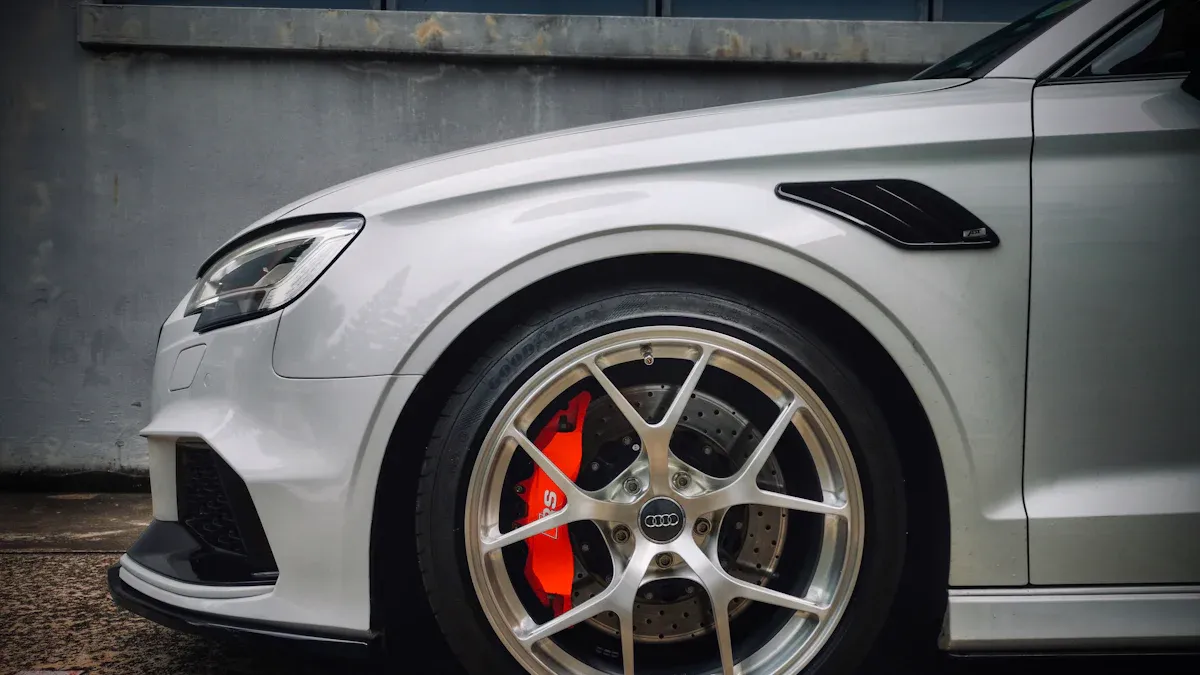
Load-critical hardware is where the 7075 aluminum alloy proves its worth. Aircraft fittings, wing ribs, landing-gear links, and missile components use it because the strength-to-weight ratio lets engineers cut mass without losing load capacity. Racing suspension arms, bicycle components, and high-load tooling follow the same logic. In each case, the part sees repeated cycling, and fatigue resistance matters as much as raw strength.
The grade also serves molds and dies that face abrasion, plus climbing hardware and firearm receivers where hardness helps. These parts usually get anodizing or coating, because bare stock pits in wet or salty air. Designers who pick 7075 accept narrower stock availability and higher tool wear in exchange for performance. Koonze application experience with both grades: [KOONZE INPUT NEEDED].
6061 vs. 7075 Aluminum: How to Choose
The final choice depends on load, environment, and budget. The table below sums up the trade-offs as general engineering guidance. Every value assumes T6 temper for both grades, and the numbers come from published datasheets at room temperature.
Criterion | 6061-T6 | 7075-T6 |
|---|---|---|
Strength need | Yield about 276 MPa (40 ksi); tensile about 310 MPa (45 ksi) | Tensile about 572 MPa (83 ksi), nearly double |
Machinability | Cuts easily, slow tool wear | Higher cutting resistance, faster tool wear |
Anodizing | Even color across a batch | Copper can shift dyed shades |
Weldability | Welds with 4043 or 5356 filler | Arc welding not advised for structural joints |
Corrosion resistance | Good without a finish | Needs anodizing or coating outdoors |
Relative cost | Lower | Higher |
Note: Treat this table as a starting point. Confirm values for the exact temper on the mill certificate before release.
Choose 6061 When
Pick this grade for most machined parts. Brackets, housings, fixture plates, and electronic chassis seldom come close to the yield limit of 6061-T6, so extra strength gains nothing. The alloy also shortens cycle time, because cutters last longer and setups stay simple.
Choose it when the part needs welding. Common fillers make sound joints, and post-weld heat treatment brings back much of the lost strength. Choose it for outdoor hardware too, since bare stock stands up to rain and salt air without a coating. Cosmetic parts with tight color control also favor this grade, because anodizing stays even across a batch. Buyers weighing 6061 vs 7075 aluminum for low-volume runs often find stock on the shelf, which cuts lead time.
Choose 7075 When
Pick this grade when strength drives the design. Aircraft fittings, racing links, and high-load tooling use 7075-T6 because the tensile strength near 572 MPa (83 ksi) lets engineers remove mass without losing capacity. Fatigue resistance adds value under repeated cycling.
Choose it when hardness resists wear at sliding contacts, such as molds and dies. Accept the trade-offs first. Plan a protective finish, isolate the metal from steel fasteners, and avoid fusion welding on structural joints. The 7075 aluminum vs. 6061 aluminum decision usually turns on one question: does the part carry a load where failure is costly? A yes points to 7075.
The difference between 6061 and 7075 aluminum is real, yet neither grade wins everywhere. Good material selection starts with the service load, then checks corrosion, joining, and finish. Engineers choosing between 6061 and 7075 aluminum alloys should write the temper on the drawing and verify datasheet values for that temper. That habit settles most 6061 vs. 7075 disputes before the first chip flies. Koonze stock and selection support for specific projects: [KOONZE INPUT NEEDED].
For most CNC machined parts, 6061-T6 is still the practical go-to choice. It balances cost, machinability, weldability, and corrosion resistance, and its yield strength near 276 MPa (40 ksi) covers typical brackets and housings. The 6061 vs 7075 aluminum question rarely changes that answer for general work.
Pick 7075-T6 or T651 when strength-to-weight ratio and fatigue resistance drive the design, as in aerospace and defense components. Its tensile strength near 572 MPa (83 ksi) makes up for the higher tool wear and finish cost. That is the main difference between 6061 and 7075 aluminum.
Confirm the temper and datasheet values for your application. Treat this 6061 vs. 7075 aluminum comparison as general engineering guidance, not a substitute for application-specific testing.
FAQ
Is 7075 stronger than 6061?
Yes, in matched tempers. The 7075 aluminum alloy in T6 temper reaches a tensile strength near 572 MPa (83 ksi). The 6061 aluminum in T6 temper sits near 310 MPa (45 ksi). That strength gap explains why load-critical parts favor the 7075 grade.
Can a shop weld 7075 aluminum?
Usually not for structural joints. The 7075 alloy tends to crack in the melted zone as it cools, and most structural codes advise against arc welding it. Mechanical fasteners, adhesive bonding, or brazing suit this grade better. The 6061 grade welds well with 4043 or 5356 filler.
Which grade anodizes with better color consistency?
The 6061 grade holds color more evenly across a batch. Copper in the 7075 aluminum can shift dyed shades, so buyers should approve a sample first. Both grades still benefit from sealing after anodizing.
Does 7075 aluminum resist corrosion well outdoors?
Less well than 6061. Copper in the 7075 alloy weakens the oxide layer, so bare stock can pit in wet or salty air. Specify anodizing or coating for outdoor service, and isolate the metal from steel fasteners.